Shower walls and enclosures
Waterproofed backgrounds, planned grout lines and precise cuts around valves, outlets, trays and screens.
Serving York, England & surrounding areas
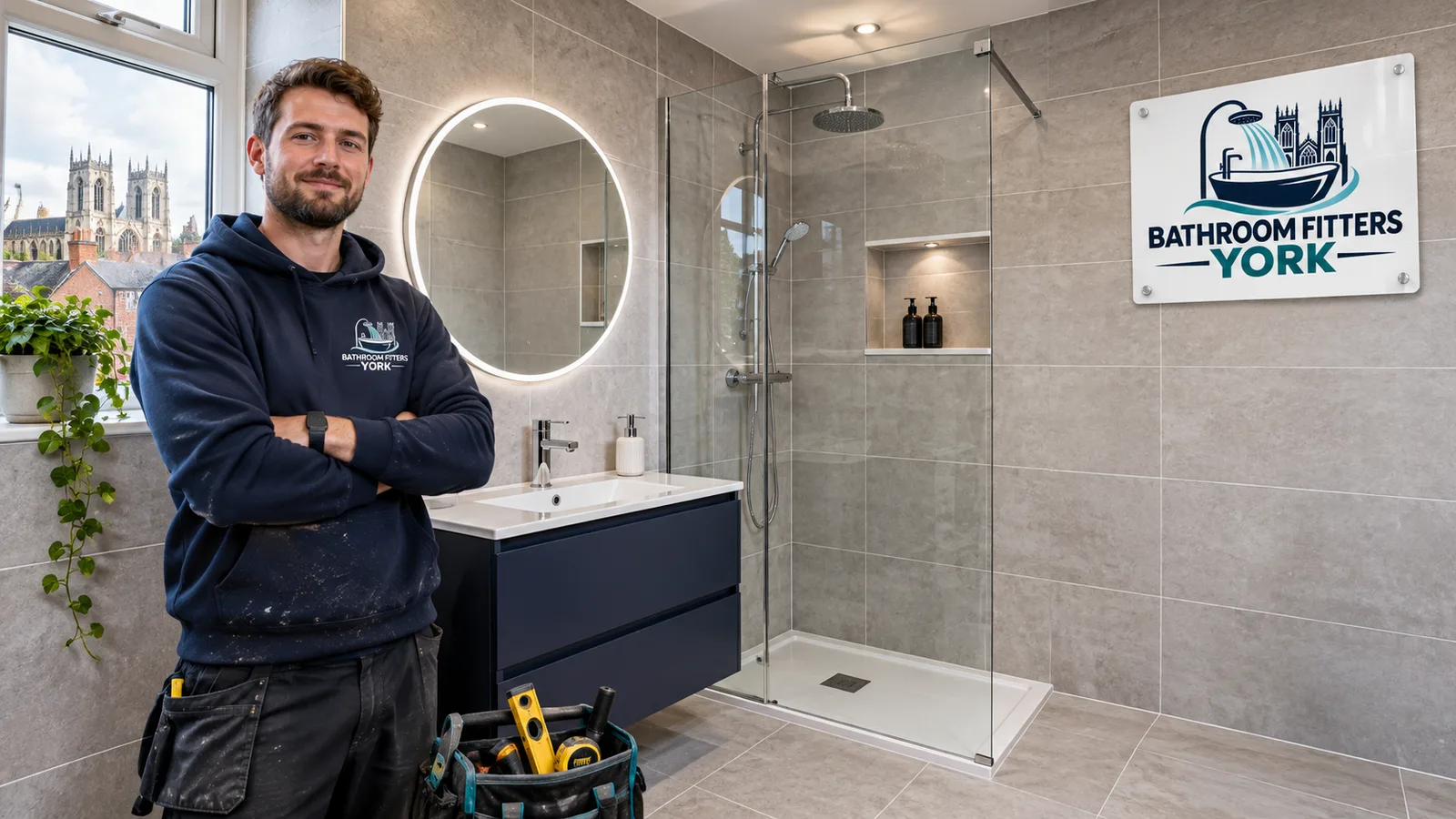
Careful preparation, accurate setting out and clean finishing for walls, floors, showers and wet areas.
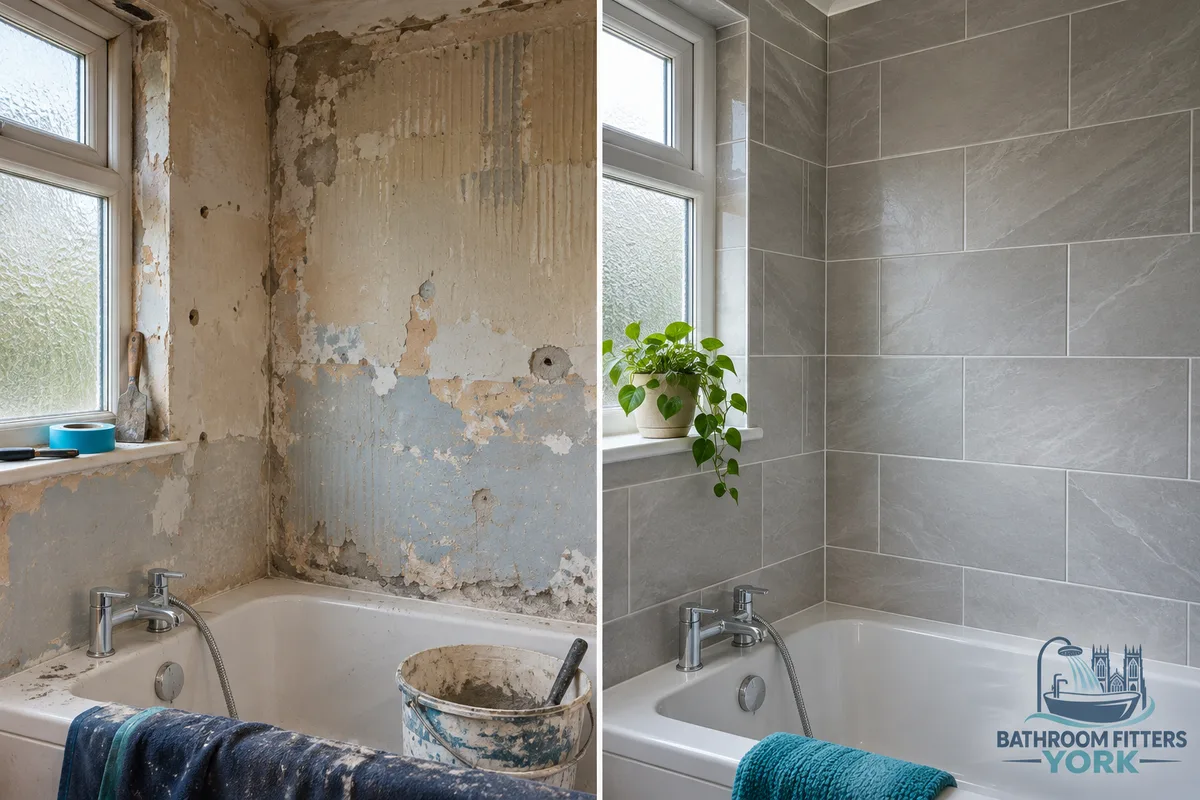
Good bathroom tiling starts behind the visible surface. The background must be sound, flat and suitable for the tile, while wet areas need the right protection before adhesive is applied. Our bathroom tiling York service covers preparation, setting out, cutting, fixing, grouting and silicone finishing for walls, floors, bath surrounds, shower enclosures and splashbacks.
Bathroom Fitters York is a bathroom fitters company York homeowners rely on, planning the work around the room rather than starting with the first full tile at an arbitrary corner. We check focal points, sanitaryware positions, changes of plane and the likely size of perimeter cuts. This avoids narrow tile slivers, wandering grout lines and awkward joins around taps, niches or window reveals.
Bathroom projects in York vary considerably. Period properties within the city walls can have uneven plaster, altered floor levels and limited access. Victorian terraces in Holgate and South Bank often call for careful checks to walls and suspended timber floors before tiling. Clifton has a mix of older terraces and later housing, while Fulford includes both established homes and newer developments. These differences affect preparation, tile layout and material choice, so the existing room is assessed before a method is agreed.
Tiles and grout do not make a shower enclosure waterproof. In areas exposed to regular water, a suitable tanking system should be installed over a stable background before tiling. This may use a liquid-applied membrane, waterproof boards or a compatible combination, with reinforced corners and sealed pipe penetrations. The chosen products need to work as one system.
Backgrounds are checked for movement, contamination, damage and excessive variation. Loose plaster or failed board must be dealt with rather than covered. Floors may require an appropriate tile backer board or decoupling membrane, depending on the construction and substrate condition. Timber floors receive particular attention because excessive flex can crack grout or loosen tiles.
Adhesive is selected for the substrate, tile material and location. Porcelain commonly needs a suitable cement-based adhesive, while some natural stone requires a white adhesive to reduce the risk of staining. Large-format tiles need a flat background and thorough adhesive coverage. Shower floors must also retain the correct fall towards the waste without low spots where water can collect.
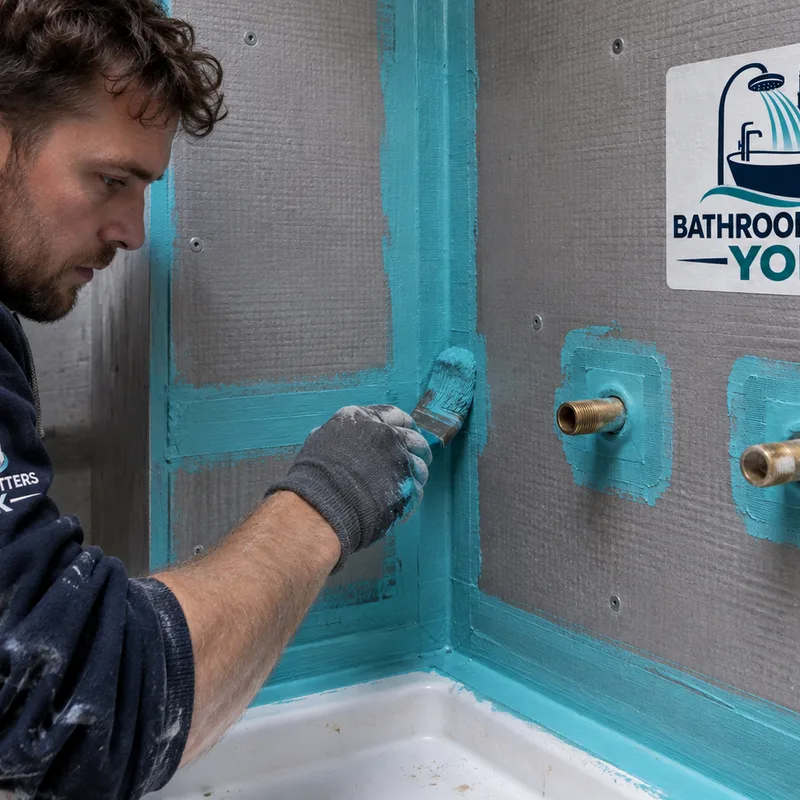
Waterproofed backgrounds, planned grout lines and precise cuts around valves, outlets, trays and screens.
Substrate checks, suitable preparation and careful tile placement around sanitaryware, thresholds and wastes.
Neat tiling around bath rims, panels, taps and adjoining walls, with flexible silicone at changes of plane.
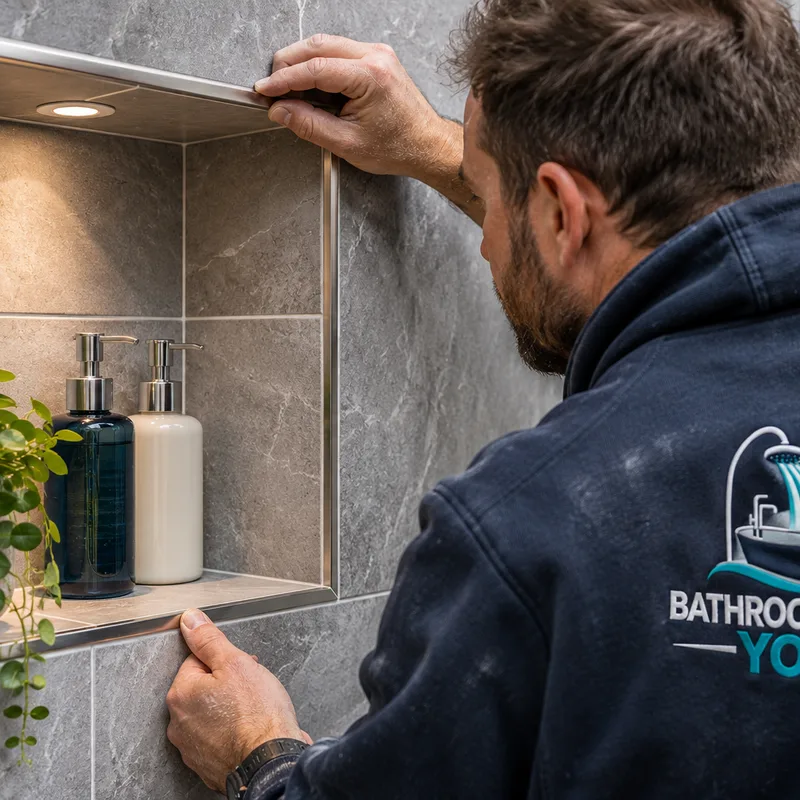
Layouts for patterned tiles, mosaics and recessed storage, including tidy trims or mitred external corners where appropriate.
Installation methods matched to tile size, weight, water absorption and the condition of the background.
Material-aware fixing, sealing and grouting for stone that needs additional protection from moisture or staining.
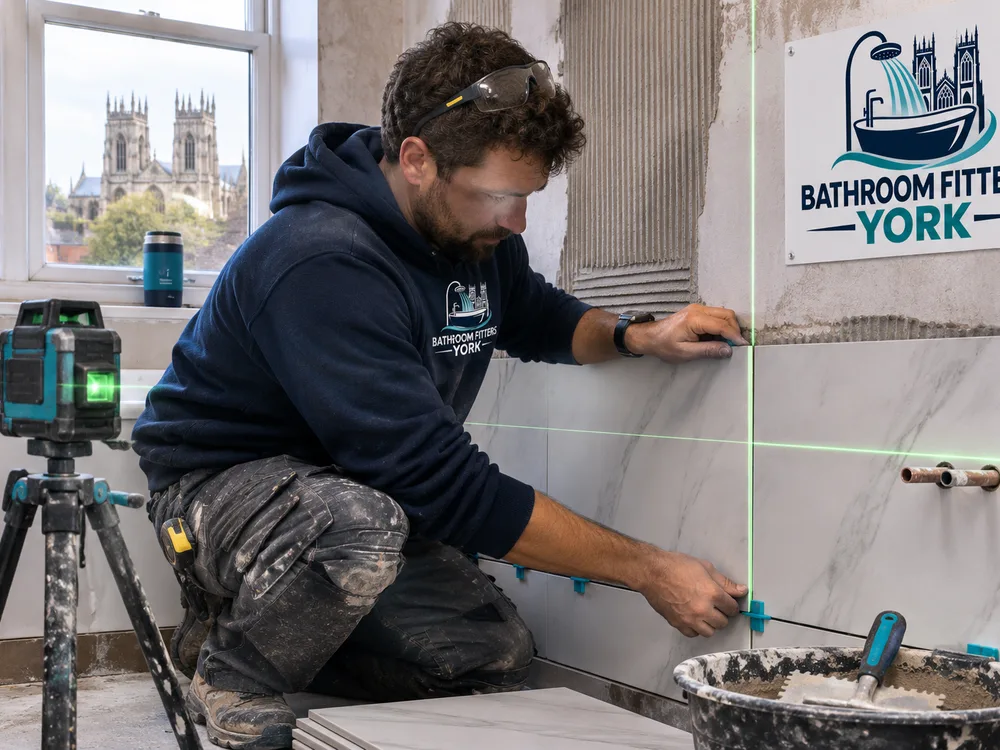
Setting out determines where grout joints, cuts and patterns will land. Before fixing starts, we consider the main sightlines from the doorway, the centre of prominent walls and the relationship between wall and floor joints. A trial layout can reveal whether shifting the starting point produces more balanced cuts.
Rectified tiles allow relatively narrow, consistent joints when the tile manufacturer and substrate permit them, but they are not designed to be fitted edge to edge. Calibrated spacers or levelling clips can help control alignment and lippage, although clips cannot correct an uneven wall or floor. Preparation remains the deciding factor.
Corners, board joints and junctions between walls and floors need room for movement. Flexible sanitary silicone is normally used at changes of plane instead of rigid grout. Movement joints must not be bridged with tile or adhesive. Once the adhesive has cured, grout is worked fully into clean joints and the surface is washed without hollowing out the joint profile.
We inspect the walls or floor, discuss tile choice and identify access, moisture, movement or level issues that may affect the work.
The planned tiled areas, preparation, waterproofing, trims, grout colour and finishing details are set out before work begins.
Unsuitable or loose material is addressed, surfaces are made ready and wet zones are tanked using compatible products where required.
Reference lines are established before tiles are cut and bedded into the appropriate adhesive with attention to coverage and alignment.
Joints are filled after curing, changes of plane are finished with sanitary silicone and the completed surfaces are cleaned for inspection.
Bathroom tiling in York typically costs about £40 to £70 per square metre for labour, while preparation, waterproofing, complex patterns and specialist materials can take a complete project into the high hundreds or several thousand pounds. Tiles and major substrate repairs are usually additional.
The final price depends on the tiled area, tile size and material, existing surface condition, access, layout complexity, removal work and details such as niches or mitred corners. A written quotation should identify preparation and finishing rather than giving only a square-metre rate. The exact cost is confirmed after the room and tiles have been assessed.
Share the room dimensions, tile details and a few clear photographs to start a practical discussion about preparation, layout and likely cost.
Book Your Free InspectionA straightforward bathroom commonly needs several working days for preparation, fixing, curing, grouting and silicone finishing. Large-format tiles, mosaics, niches, patterned layouts or substantial background repairs add time. Waterproofing and adhesive also need their specified curing periods, so the room should not be rushed back into use.
Yes, shower walls normally need a suitable waterproofing system because tiles and grout alone are not waterproof. The system may use waterproof boards, a liquid membrane, sealing tape and compatible collars around pipe penetrations. Existing backgrounds must also be stable and suitable for the combined weight of adhesive and tile.
Tiling over existing tiles can be suitable when they are firmly bonded, clean, dry, sufficiently flat and able to carry the added weight. The extra thickness must not cause problems at doors, trims, wastes, taps or sanitaryware. Loose, hollow or water-damaged tiling should be removed so the underlying problem can be addressed.
Bathroom floor tiles should be intended for floor use and provide a practical level of slip resistance for the room. Porcelain is widely used because it has low water absorption and is available in many finishes. Very polished surfaces can be slippery when wet, while heavily textured tiles may take more effort to clean.
Large-format tiles can be used in older York homes when the walls or floor are made sufficiently flat, stable and able to support them. Period properties within the city walls and Victorian terraces in areas such as Holgate may have uneven backgrounds that need more preparation. Tile size does not hide irregularity; it often makes it more apparent.
You can choose tiles first, but confirm their exact size, material and availability before the work is priced. Those details affect cutting, adhesive, setting out and installation time. Ordering extra tiles is sensible because cuts, breakages and future repairs require matching material, particularly with patterned products or tiles that vary between production batches.
Yes, grout should be cleaned with suitable products and silicone should be replaced if it splits, detaches or develops persistent mould. Ventilation and regular drying help limit moisture build-up. Cement grout may benefit from sealing when the manufacturer recommends it, while sanitary silicone belongs at corners and other changes of plane where limited movement occurs.
Tell Bathroom Fitters York about the room, the tiles you have in mind and any known surface issues. We will help define the preparation, finish and practical next steps before work starts.